FENCELINE Outdoor CLT Planks
Engineered for New Zealand conditions, where outdoor performance matters most.

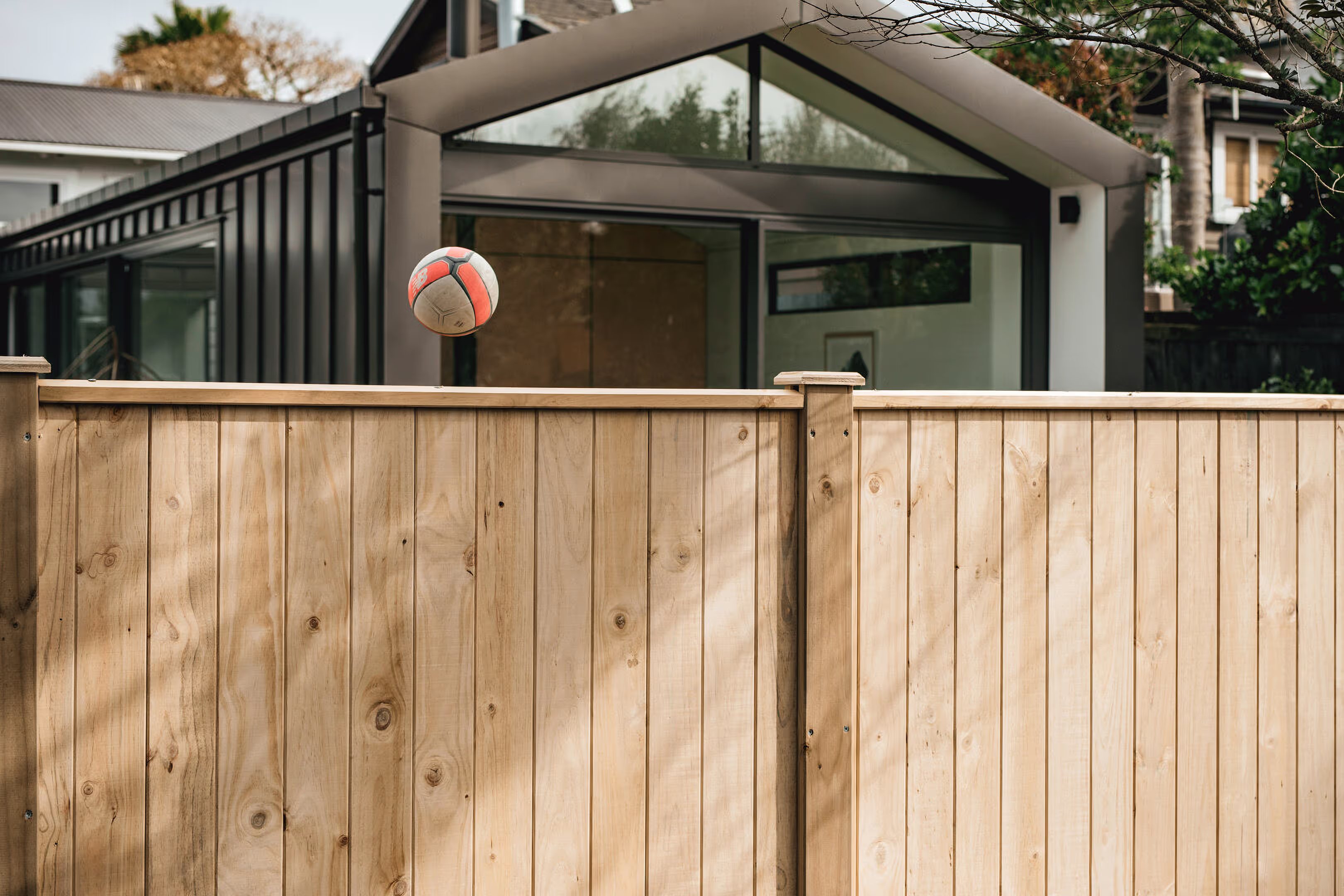
FenceLine is a purpose-built outdoor Cross-Laminated Timber plank for fencing, boundary systems, and landscape structures. Grown from NZ Radiata Pine, it's tongue and groove design makes for easy and stable construction. FenceLine provides a consistent, engineered solution that performs in New Zealand conditions.
Key Features:
Applications:
For more information on Laminata fencing, including product dimensions, installation guidance, and pricing, please visit the Laminata website.
FenceLine is designed for straightforward installation across common fencing systems.
Its engineered structure helps maintain alignment across long fence runs, reducing rework and improving finish quality.
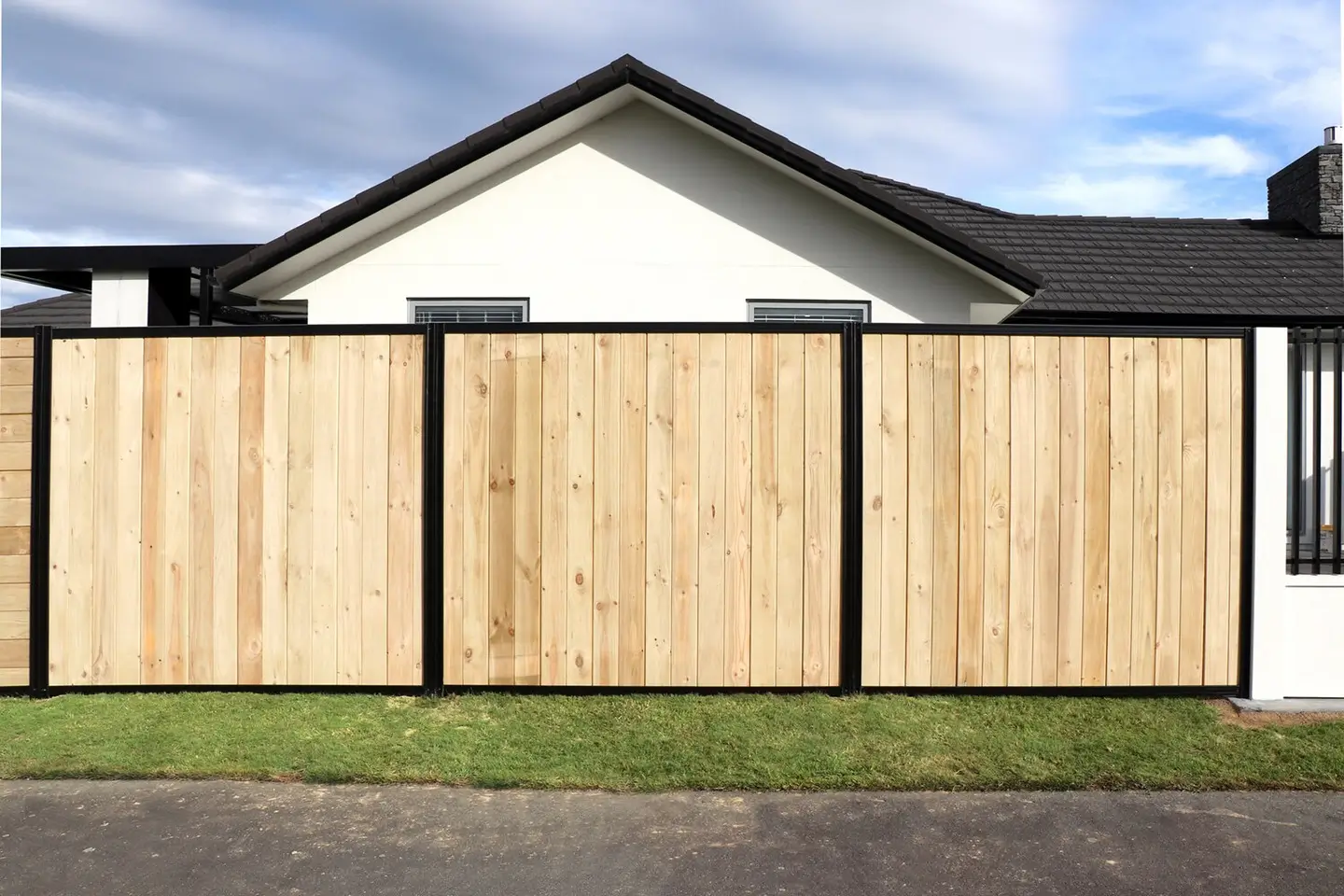



Product Type: Cross Laminated Pine Plank
Technology: XLP (Exterior Grade)
Application: Outdoor / Fencing / Landscaping
Material: NZ Radiata Pine
Profile: Tongue & Groove
Finish Options: Bandsawn
Treatment: Suitable for exterior use (moisture and exposure conditions)
Installation: Timber or steel framing systems
Finish: Bandsawn appearance for a more architectural finish
Tongue and groove fence planks are usually chosen for a more continuous, premium-looking fence face with tighter visual joins and less direct line-of-sight through the fence. For many buyers, the appeal is privacy, cleaner lines, and a more finished look than a standard paling fence. NZ fencing merchants also commonly market tongue and groove-style profiles as a more architectural fencing option.
Often, yes, where the plank dimensions and profile suit the channel or frame system being used. This is a common search topic because many buyers want the look of timber with the convenience of modular steel post-and-rail or aluminium frame fencing layouts. The key is confirming profile fit, expansion allowance, and fixing details before ordering.
They may be suitable for some retaining applications, but retaining walls are not all the same. In New Zealand, treatment level matters a lot: H4 is commonly associated with ground contact, while H5 is used for heavier structural ground-contact situations such as more demanding retaining or piling conditions. Retaining wall use should always be checked against the treatment class and engineering requirements of the job.
For exterior timber, the treatment class depends on exposure. Current NZ guidance commonly describes H3.2 for outdoor above-ground use, H4 for ground contact, and H5 for higher-risk structural ground-contact uses. That makes treatment class one of the most important FAQ topics for any outdoor plank page.
For treated exterior timber, the safe answer is always to match the fixing to the exposure level. NZ guidance commonly points to hot-dipped galvanised or stainless steel depending on treatment type and site exposure, and where there are long periods of wetness, stainless steel is commonly recommended.
Yes. Where treated timber is cut on site, guidance commonly says cut ends should be resealed with the appropriate end sealer to help maintain durability performance. This is especially important on outdoor products used in exposed conditions.
In many cases, yes. A tongue and groove fence is typically chosen when buyers want stronger visual screening, fewer visible gaps, and a more consistent finish on the boundary. Privacy is one of the biggest consumer search drivers for this style of fencing.
Yes. Any exterior timber system performs better when detailing avoids trapping water. Good design should allow moisture to escape rather than sit trapped in channels, rebates, or against permanently damp surfaces. That is especially important for fencing and retaining-adjacent work.
That depends on the intended look and maintenance plan. Exterior timber can often be left to weather naturally, but many buyers prefer to stain, oil, or coat it to help control colour change and maintain a more consistent finish over time. On fencing pages, this is a high-interest search topic because buyers want to know how the product will age outdoors.
The main checks are treatment class, above-ground versus ground-contact suitability, fixing type, drainage detail, end-sealing requirements, and whether the application needs engineering sign-off. This matters even more when the same plank type may be used across fencing, screening, edging, and retaining-style layouts.
FenceLine is part of Laminata’s outdoor CLT Timber range — a system developed for reliable outdoor timber performance in New Zealand conditions. Our cross laminated pine planks are designed to solve common challenges builders face with traditional timber fencing, including movement, inconsistency, and installation time. By laminating multiple layers of radiata pine, we create a more stable, predictable product that performs across seasons.
For builders and contractors, this means straighter fence lines, fewer call-backs, and faster installs. For merchants, it means a consistent, easy-to-stock product that meets growing demand for engineered timber solutions. If you’re planning a fencing project or looking to standardise your builds, get in touch with our team or find your nearest merchant.
An Outdoor Plank Specifically Designed for Fencing
FenceLine is built with one job in mind; fencing. It is not a general exterior board being adapted across multiple uses. The size, format, and structure are all designed to suit fence construction, where consistency across long runs and clean alignment between boards are critical. This makes it easier to plan and build fences without having to work around irregular boards or inconsistent sizing. What you see in the product is what you get on site.
Consistency Across Every Board
One of the common frustrations with fencing timber is variation from board to board. Differences in width, straightness, or finish can slow down installation and affect the final result. FenceLine is designed to reduce that variability. Each plank is produced to a consistent standard, which helps maintain even spacing, cleaner lines, and a more uniform appearance across the full fence. This becomes especially noticeable on longer fence runs, where small inconsistencies can quickly add up.
Working Better Over Distance
Fencing is rarely a small-scale job. Whether it is a residential boundary or a larger project, fences often run across long distances where alignment matters. FenceLine is designed to hold its line over length. The stability of the plank helps reduce the need for constant adjustment during install, allowing builders to maintain a straight, even finish more efficiently. This is particularly useful when working with tight tolerances or when the fence is a visible part of the overall build.
Designed for Flexible Installation Methods
Laminata's FenceLine can be used across different fencing approaches, depending on the project requirements. It works with traditional timber post systems as well as newer steel frame systems that are becoming more common across New Zealand and Australia. This flexibility means builders can use the same plank across different project types without needing to change products or adjust specifications significantly. It also makes FenceLine easier to integrate into modern fencing designs where consistency and fit are important.
A Cleaner Starting Point for Finishing
The finish of a fence often depends on how consistent the boards are before coating. Uneven surfaces or irregular timber can make finishing more difficult and affect the final look. FenceLine provides a more consistent surface to start from. With finish options like Clean, Brushed, and Bandsawn, the product can be matched to the intended style from the outset, reducing the amount of work needed to achieve the desired result. This helps both with visual outcome and with efficiency during the finishing stage.
Reducing Variation in the Timber Planks on Site
On many fencing jobs, time is lost managing inconsistencies in timber rather than progressing the build. Sorting boards, adjusting for size differences, and working around defects all add time. FenceLine is designed to reduce that variation. By providing a more predictable product, it allows builders to focus on installation rather than correction. This is especially valuable on projects where timelines matter or where multiple trades are working in sequence.
Clear Product Fit for Fencing Projects
FenceLine has a defined role within the Laminata range. It is the dedicated fencing plank, separate from landscaping or general outdoor construction products. This clarity helps remove confusion when selecting materials. Builders, merchants, and specifiers can identify the right product quickly, without needing to interpret whether a board is suitable for the application. It keeps the process simple and reduces the risk of using the wrong product for the job.
Built for Predictable Results
At its core, FenceLine is about predictability. The goal is not just to install a fence, but to achieve a result that is straight, consistent, and holds its appearance over time. By focusing on consistency, stability, and ease of use, FenceLine supports a smoother build process and a more reliable outcome.