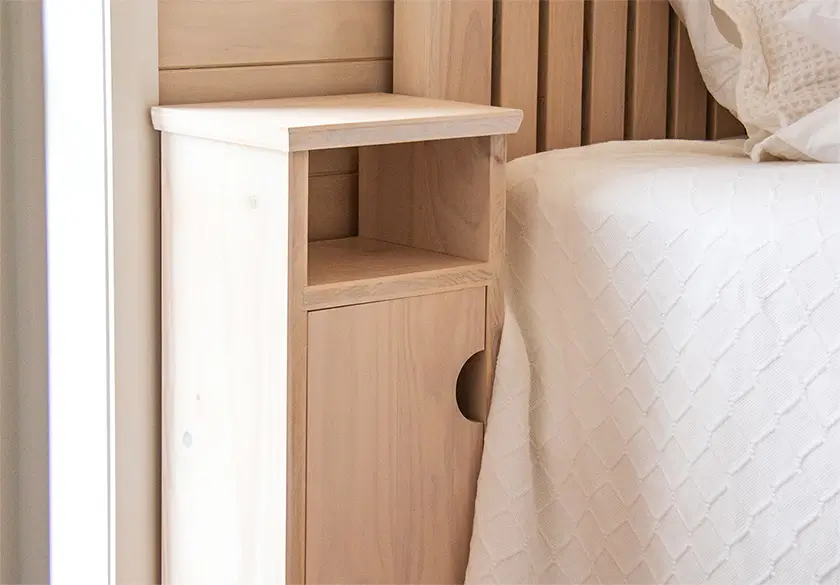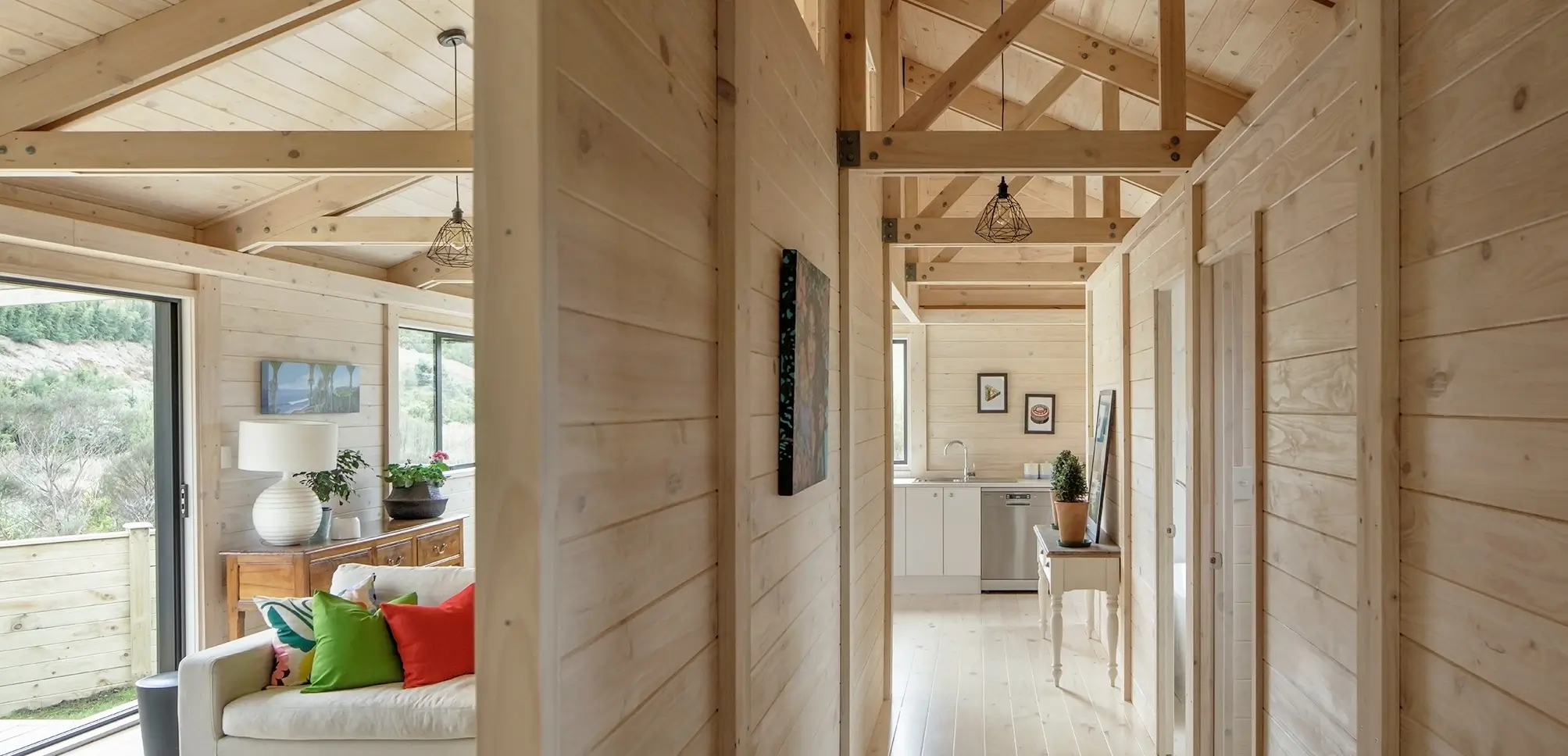
PINELINE Interior Lining Planks
NZ CLT Planks for Walls and Ceilings

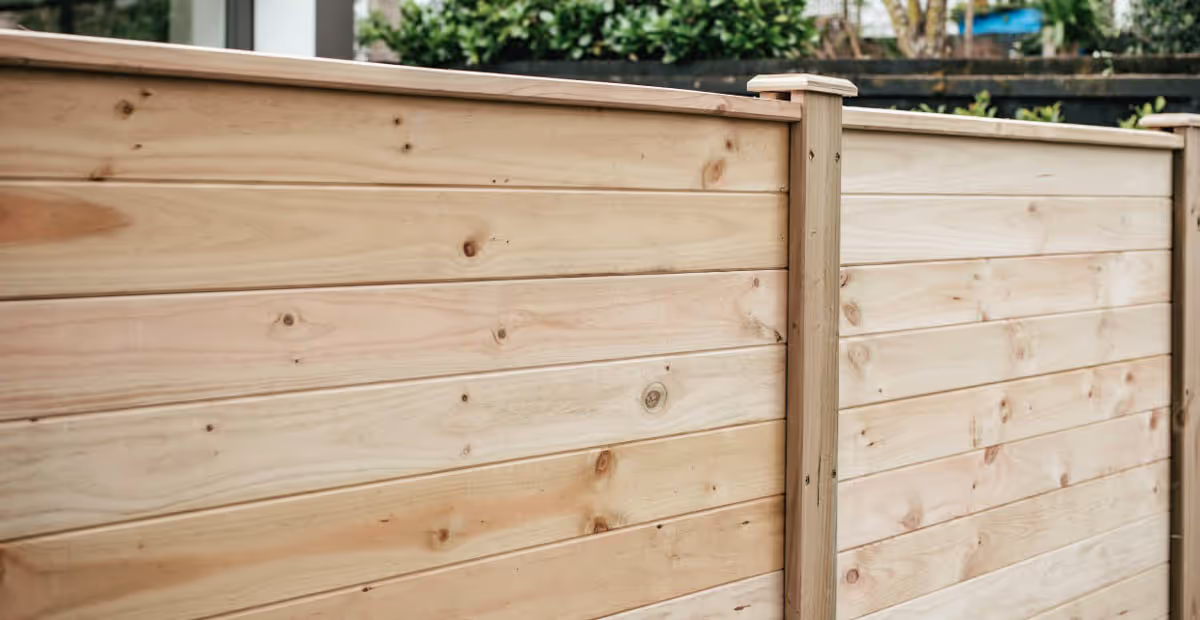
PineLine is an interior tongue and groove CLT plank made for projects that need a clean, stable timber lining solution. It is designed for builders and specifiers looking for a product that installs efficiently, presents well, and performs more consistently than standard solid timber lining boards.
Key Features:
Applications:
Product Name: PineLine
Product Code: 000002
Technology: XLP
Material: Cross Laminated Pine
Application: Interior use
Panel Thickness: 21mm
Panel Width: 275mm
Panel Length: 1800mm
Profile: TG&V (Tongue, Groove & V-Joint)
Finish Options: Brushed Texture
Span Capability: Up to 600mm centres, subject to engineering and design requirements and building code
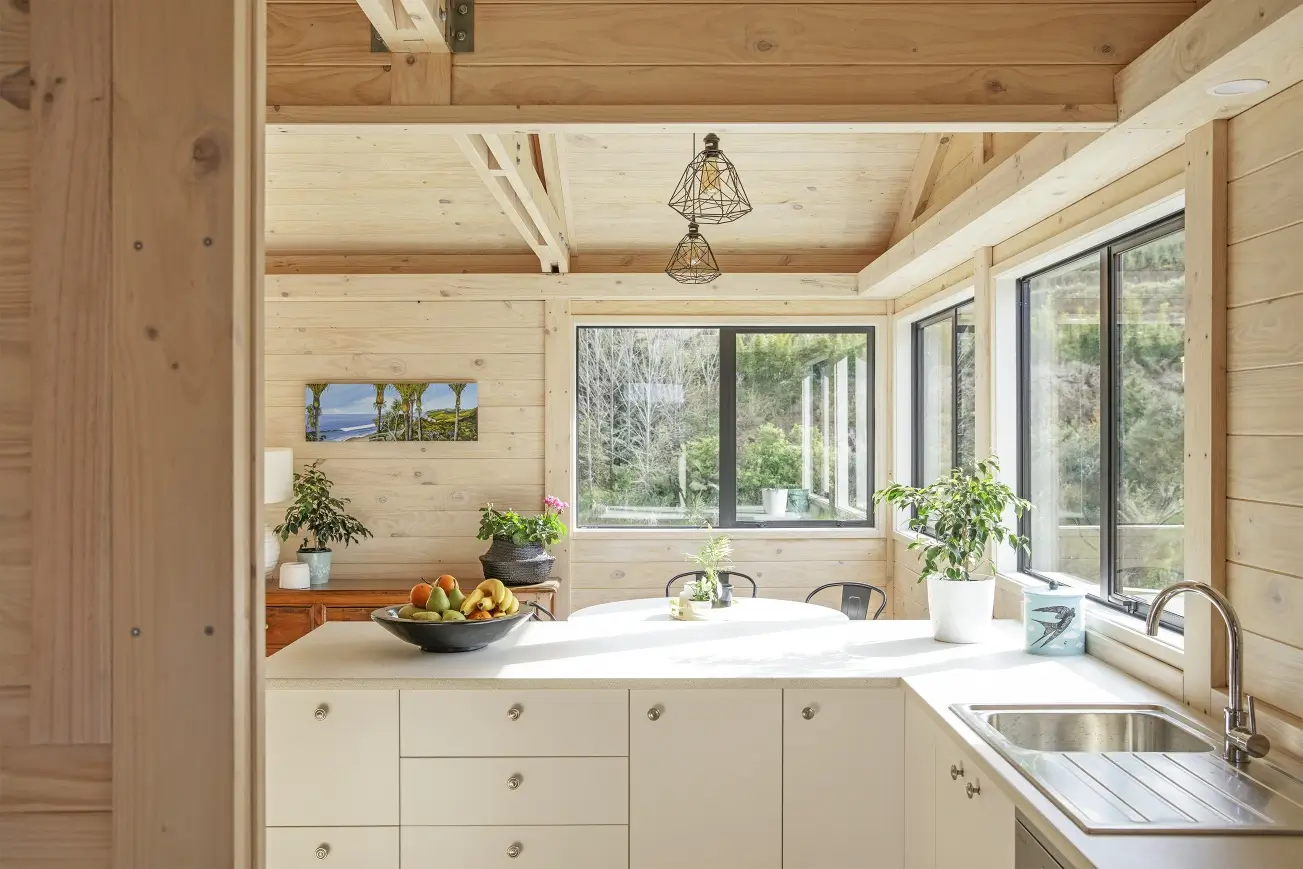


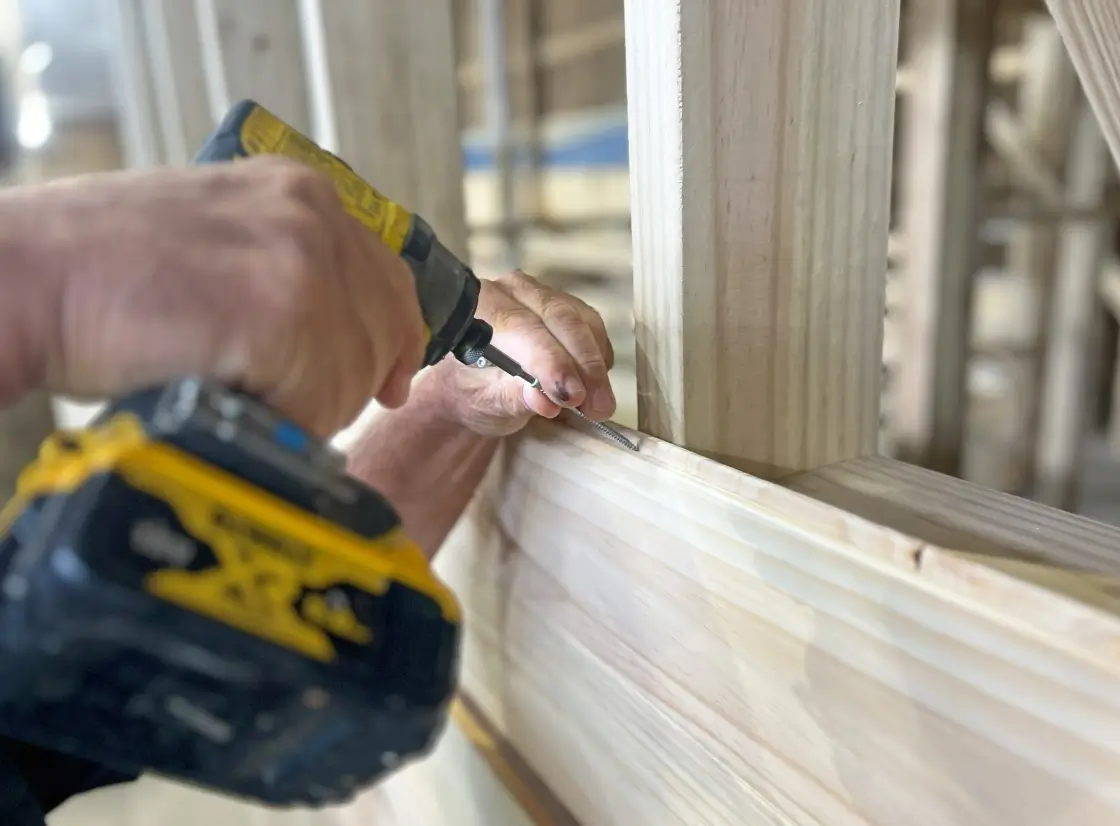
PineLine uses a precision-machined tongue and groove profile with V-joint detail, allowing the planks to join cleanly and create a consistent lining surface. This makes installation faster and helps deliver a more polished finish across both walls and ceilings. Highly suitable for fixing across timber or steel framing systems using standard nails or screws, depending on project requirements.
PineLine is also engineered to span up to 600mm stud centres, subject to engineering and design requirements and compliance with the relevant building code pathway.
Tongue and groove CLT lining planks are mainly used for interior walls, ceilings, feature linings, garages, utility rooms, and similar dry internal spaces. In the NZ market, tongue and groove lining systems are commonly chosen for clean joins, a more finished timber look, and faster installation across large interior areas.
Yes. Tongue and groove interior lining products are commonly used on both walls and ceilings because the interlocking profile helps keep lines tidy and consistent across overhead installations. Ceiling use is one of the most common search intents for this product type in New Zealand.
No. If the product is untreated and specified for interior use, it should be treated as a dry-use lining product only. Mainstream CLT guidance is cautious about moisture exposure, and interior lining products in the NZ market are generally sold for internal dry applications rather than exposed outdoor use.
Yes. Letting timber lining products settle in the space before installation is good practice, especially where interior temperature and humidity may differ from storage conditions. This helps reduce the risk of movement after fixing and finishing. Merchant fixing guides for timber-style lining products also stress keeping interior lining products dry before installation.
Yes. Tongue and groove lining products are often chosen for garages, mudrooms, utility areas, hallways, and other hard-working spaces because they create a more finished surface than standard sheet linings while still being practical to install. Durable timber-style lining systems are commonly marketed into exactly these higher-use zones.
Tongue and groove boards are chosen when you want a tighter, cleaner join and a more continuous timber-lined look. The interlocking edge helps alignment during install and reduces the visual harshness of open board gaps. That is why tongue and groove remains one of the most searched profile types for interior wall and ceiling linings.
Only with care, and only where the product specification allows it. An untreated interior plank should not be assumed suitable for high-moisture or wet-area exposure. If the room experiences frequent steam, splash, or persistent moisture, the product should be checked against its scope of use and finishing requirements before specifying it.
Yes. One of the main reasons people choose tongue and groove linings is that the board profile creates a deliberate repeated joint detail, rather than broad sheet joins that may need more stopping and finishing. This is a major design and installation benefit for feature walls and ceilings.
Start with the application. Check whether the product is designed for interior lining, indoor project work, fencing, or exterior use. Then check profile, installation requirements, durability scope, maintenance needs, and published product information.
The main things are: interior-only scope, profile type, fixing method, finish requirements, storage conditions, moisture exposure, and whether the product is being used as a lining only or as part of a broader building system. In New Zealand, internal linings and structural wood-based products also sit within the wider BPIR information environment, so clear product information matters.
If you are choosing an internal timber lining plank, the most important question is whether the product has actually been designed for lining. PineLine has. It is not a general-purpose board being used as a workaround. It is a purpose-built interior lining plank with a defined profile, set dimensions, and a clear application across walls and ceilings. That matters because lining products need to do more than look good in a sample. They need to install cleanly, align properly, and hold a consistent finish across the full surface. PineLine’s tongue and groove profile supports that outcome, while Laminata’s XLP cross laminated pine technology is designed to improve stability and reduce the common movement issues that can affect finish quality over time.
Why Interior Timber Lining Products need to Be Purpose-Built
Not all timber boards are designed for lining. Many projects still use general-purpose timber for walls and ceilings, which can lead to inconsistent finishes, slower installation, and more time spent correcting alignment issues.
PineLine is designed specifically for interior lining applications. That means the profile, dimensions, and finish are all set up to suit walls and ceilings from the start. Instead of adapting a board to fit the job, you are using a product that has already been designed for it. This makes a noticeable difference when it comes to installation speed, alignment, and the final result.
The Role of Profile in a Clean Finish
The tongue and groove profile used in PineLine is not just about how the planks connect. It plays a key role in how the finished surface looks and performs.
A well-machined tongue and groove system helps each plank align consistently, reducing visible gaps and keeping the surface straight across the full wall or ceiling. The V-joint detail adds definition between boards while still maintaining a clean, uniform appearance.
For builders, this means less time adjusting boards during install. For clients, it results in a more refined and professional finish.
Why Stability Matters in Interior Spaces
Even in interior environments, timber movement can affect the final outcome. Changes in temperature and humidity can cause standard boards to shift, which may lead to gaps, uneven lines, or surface inconsistencies over time.
PineLine is made using cross laminated pine, which is designed to improve stability and reduce this type of movement. By bonding layers together in a controlled process, the plank is less likely to react unpredictably once installed.
This helps maintain the integrity of the lining over time and reduces the risk of call-backs or ongoing maintenance issues.
Designed for Efficient Installation
Time on site matters. Interior lining can quickly become labour-intensive if boards are inconsistent or difficult to align.
PineLine is designed to simplify the install process. The consistent sizing, tongue and groove profile, and engineered stability all work together to make installation more predictable. Boards line up more easily, fixing is more straightforward, and progress is more consistent across the job. For builders, this can mean faster installs and fewer interruptions. For larger projects, it also helps with planning and sequencing, as the product behaves consistently from one area to the next.
Balancing Appearance and Practical Use
Interior timber lining often sits between two requirements. It needs to look good, but it also needs to be practical to install and maintain. PineLine is designed to balance both. The available finishes allow the product to suit different interior styles, whether the goal is a clean modern space or a more textured timber look. At the same time, the underlying structure of the plank is focused on performance, helping ensure that the appearance holds up over time. This balance makes PineLine suitable for both functional spaces like garages and utility areas, as well as more visible interior environments.
A More Predictable Result from Start to Finish
When choosing a timber lining product, the goal is not just to complete the install. It is to achieve a result that stays consistent over time. PineLine is designed to support that outcome by combining a purpose-built profile with engineered stability. From the first board installed through to the finished surface, the system is focused on delivering a more predictable result.
For New Zealand builders, that means fewer variables to manage. For project owners, it means a finished space that looks better and performs as expected long after installation.